Functional cookies only — language and sign-in. No ads, no tracking.

Adaptive platform for triathlon

Reach the finish in one piece.

Swim, bike, run and strength — in the hours between work and family. Load grows inside a safe corridor: the cap is an engine rule, not willpower. The coach in the chat explains every decision; you apply it.

Request → invitation by email → short questionnaire → first week of the plan. Free, no card needed.

Week 38≈ 7 h · press a day
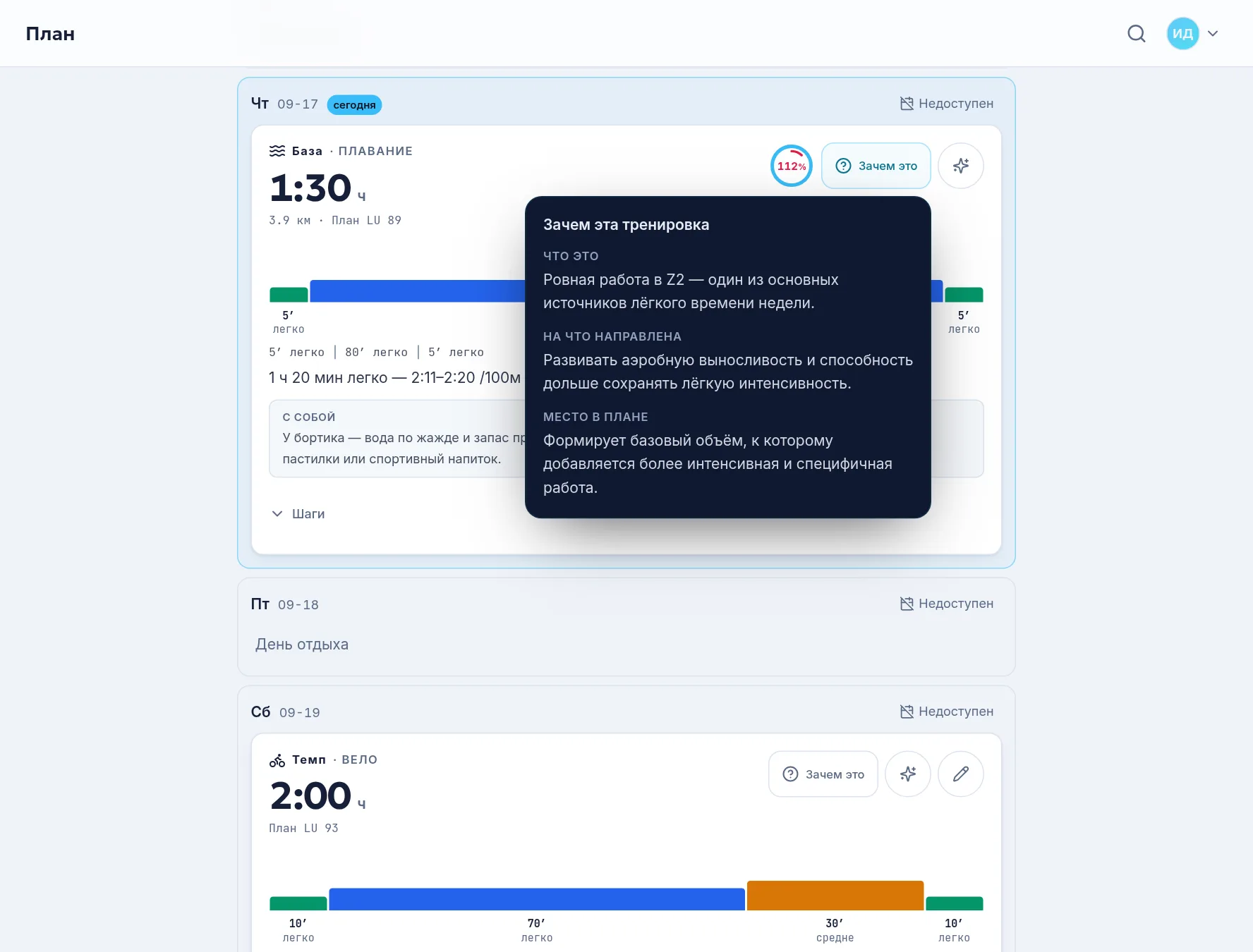
Thu 17 · today · swim

Base swim

1:30 · 3.9 km · 89 LU · 5′ easy | 80′ easy | 5′ easy
From the session card — “Why this session”

What it is. Steady Z2 work — one of the main sources of the week's easy time.

What it develops. Aerobic endurance and the ability to hold easy intensity longer.

Place in the plan. Builds the base volume that harder, more specific work is added to.

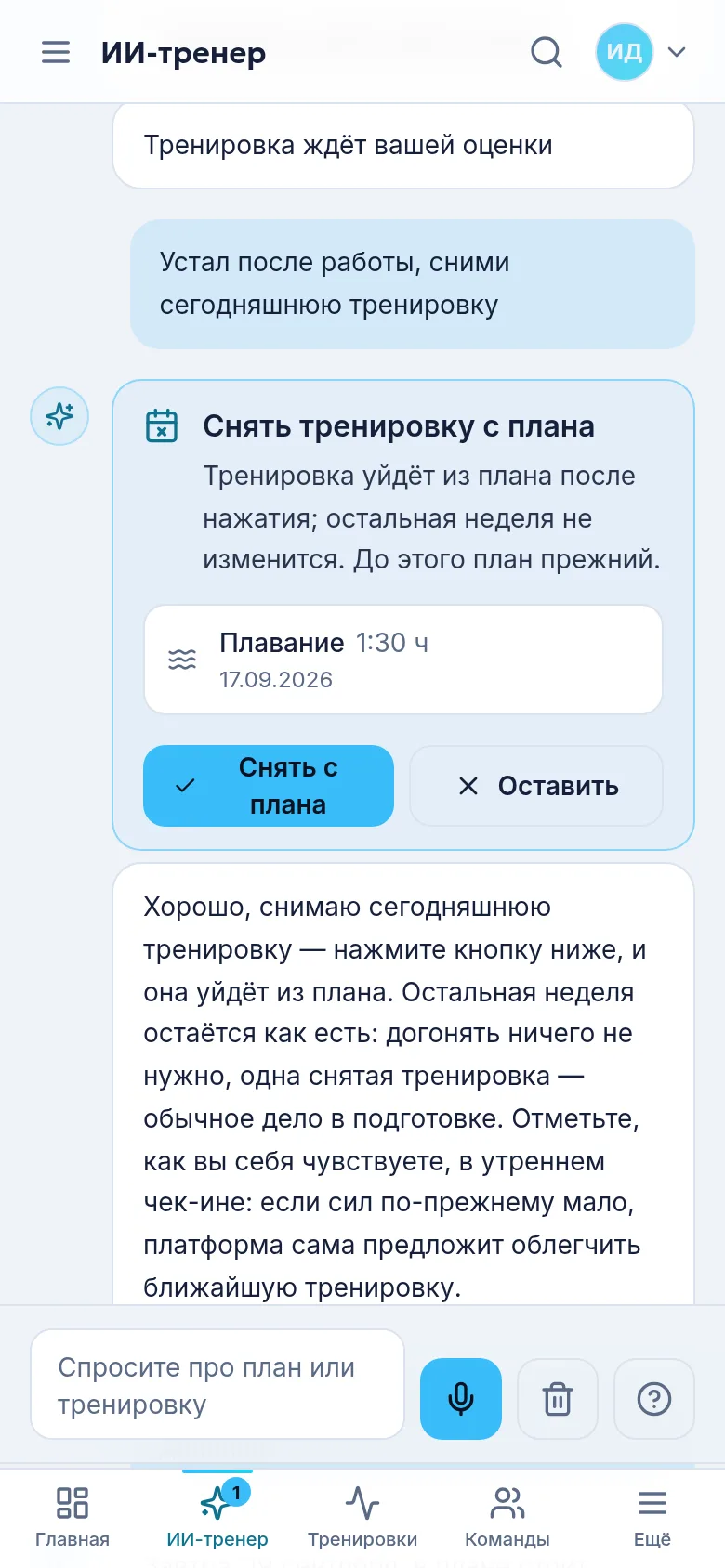
Tired after work?

Write or say to the coach: “tired, drop today's”. It replies with a “Remove from plan” card — the plan changes only after your button. The rest of the week stays as it is: nothing to catch up.

What it looks like — in the coach row below

Price
0 ₽While we can keep it so. If that changes, we'll say in advance.
Load growth
+15 %Over the best of your last four completed weeks. The plan does not grow above that.
Connection
1Strava or intervals.icu: workouts arrive on their own and the week is rebuilt from what you actually did. A file from your watch or a manual entry works too — by hand each time.
Data
152-FZStays in Russia. On account deletion we delete or anonymise it within 30 days.

The coach in the chat receives an anonymised training context — no name, e-mail or health answers.

01 — The week ceiling

Push the ceiling yourself — no account, no questionnaire

The ceiling follows the same rules as the plan in your account. Drag “I want” higher and see where the engine stops you.

02 — What's inside

Seven things TriCoo does. Each with a screen, not a promise.

Screens are from the product, shot on a demo athlete: no real people or their data.

01 / 07

Keeps load inside the corridor

The weekly increase is at most +15 % over the best of your last four completed weeks and never above the cap for your experience. Try to jump higher — the engine stops you before you decide to push through. It asks how you feel and removes load on warning signs.

Safety corridorIn the corridor
How hard do you push?
LoadSafe corridor
02 / 07

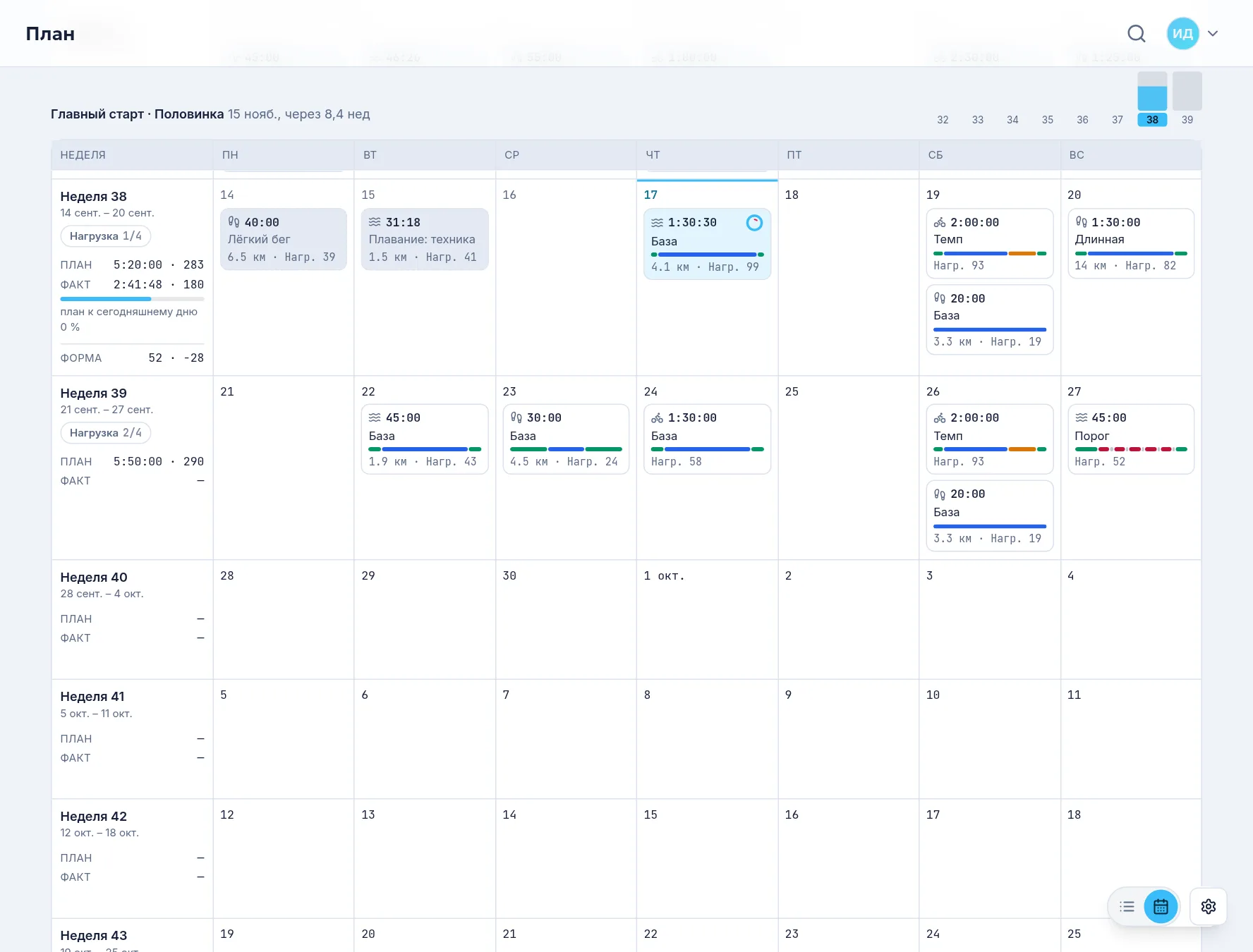
Rebuilds the week when life gets in the way

Missed, ill, away — the rest of the week is recomputed from what is actually left. The facts arrive from Strava or intervals.icu on their own: the plan knows what you did, not what you meant to. We don’t catch up on what was missed: catching up is the most common way to break.

TriCoo plan calendar: week 38 — plan and fact by day, load and form by week, the main racePlan · Fact · Form
03 / 07

The coach edits the plan — you confirm

Write or say: “tired, drop today's”. The coach removes, moves or adds a session — after your button. Until then the plan is unchanged. Ask why tomorrow is intervals — you get the reasoning in numbers.

TriCoo coach thread: the message “Tired after work, drop today's session” and the card “Remove session from plan” with the buttons “Remove” and “Keep”
04 / 07

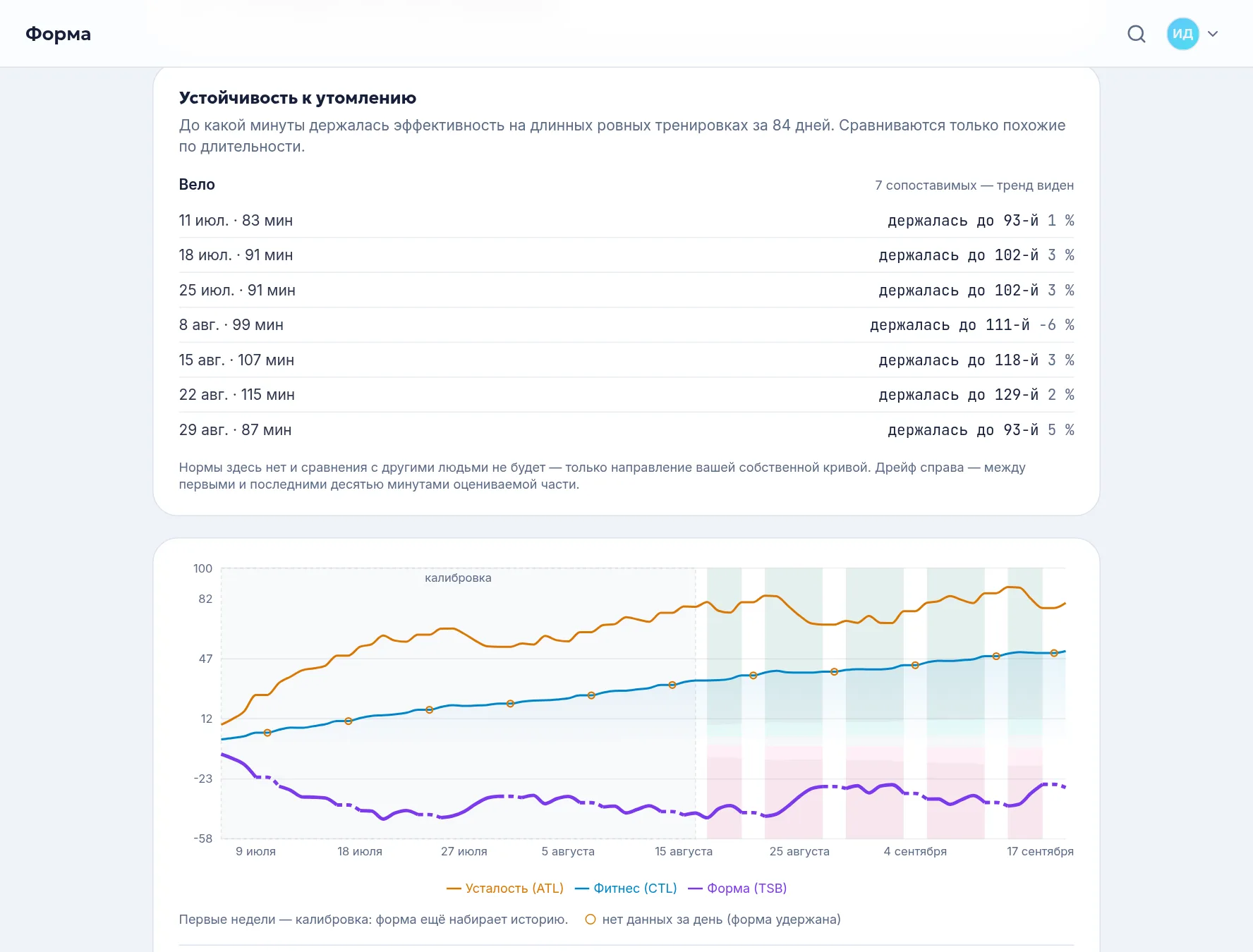
Works without tests or sensors

Thresholds are found in your ordinary sessions. Until then the plan runs by perceived effort. The app offers a control test itself when it is really needed; you can decline.

TriCoo “Form” screen: fatigue, fitness and form by week; the first weeks are labelled “calibration”First weeks — calibration
05 / 07

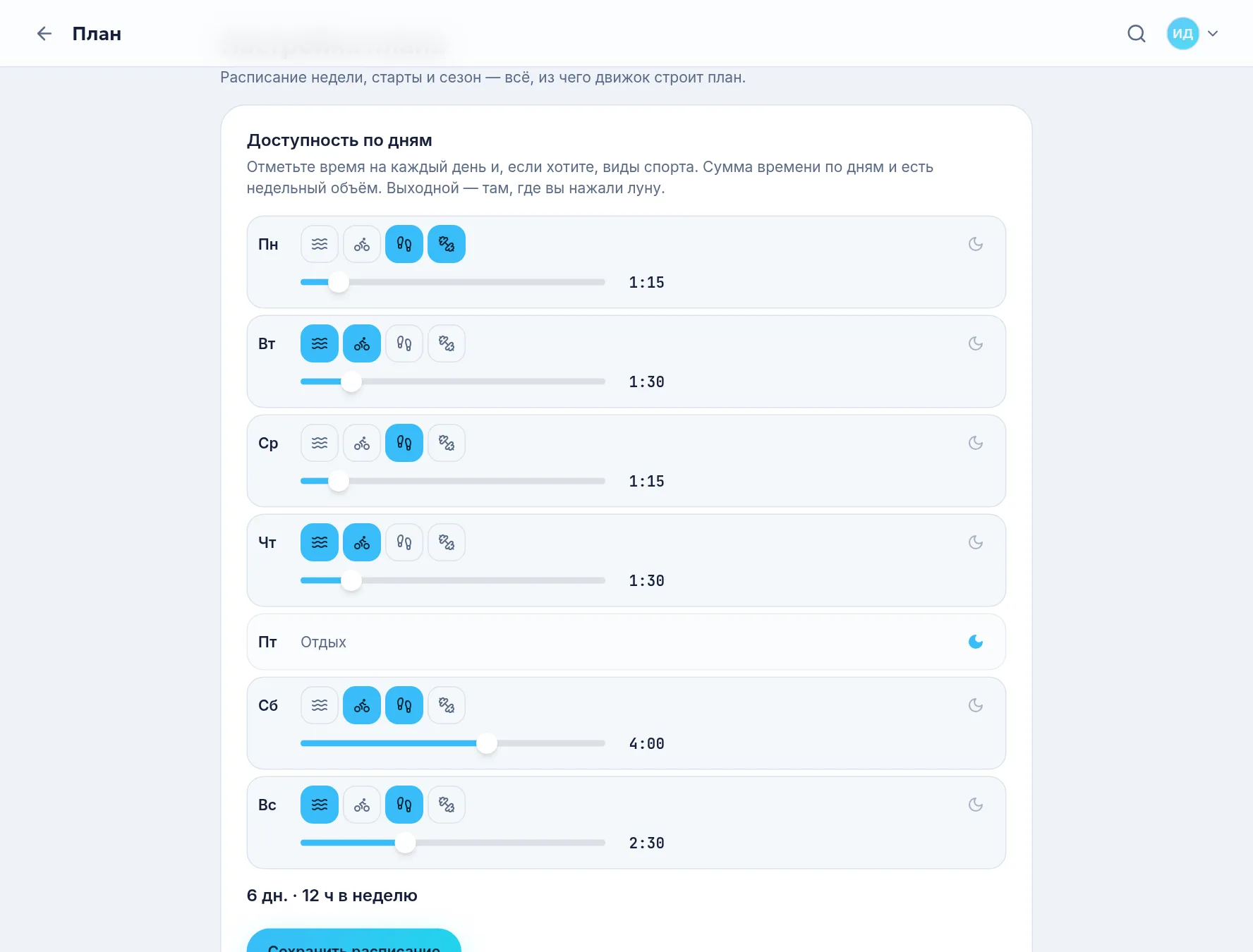
The week is built around your days

Tell it which days and which sports you can do — pool on Tuesdays, bike at the weekend — and how much time you have each day. The engine keeps the sports strictly and treats the time as a target with a small tolerance; the long session lands on your freest day. The sum of your days is your weekly volume.

TriCoo plan settings: per weekday — which sports are allowed, how much time there is and where the rest day isDays · sports · time
06 / 07

Explains every number and every decision

Every session has “Why this session” and a “How the load was computed” breakdown: the formula, the values plugged in, the threshold and its confidence. Every change to the week carries a reason code and the numbers “was → is”. Every term has a plain-language glossary entry. Full transparency is not decoration: a rule you can’t understand can’t be checked, and so can’t be trusted.

TriCoo session card: the “Why this session” breakdown — what it is, what it develops, its place in the plan
07 / 07

Your data is yours

Personal and medical data stays in Russia and does not go to the AI coach: it never sees your answers about health and well-being. A wall in the code, not a checkbox in settings.

Sessions arrive from Strava or intervals.icu on their own; a file from your watch or a manual entry works too.

Sessions — whichever way suits you
Stravaintervals.icuFile from watchManual entry
Database in Russia · TriCoo engine

Plan, load, form, thresholds — computed and stored by TriCoo. The health questionnaire and well-being live only here.

A wall in the code
Model · the coach in the chat

Receives an anonymised training context: no name, e-mail, diagnoses or well-being.

Excerpt · Privacy Policy, section 9
“Health data and other personal data are never passed to language models (AI). […] The AI coach works exclusively on an anonymised training context: without a name, e-mail address, diagnoses or other identifying details.”

Revision 5 of 17.09.2026, verbatim. Open the document

What the coach sees — and what it never sees

Sees, anonymised

  • The week’s plan and recent sessions: sport, time, load, intensity, distance, your effort rating
  • Fitness, fatigue and form
  • The next race and current thresholds
  • Engine proposals waiting for your button

Never sees

  • Your name and e-mail
  • Health questionnaire and morning check-in answers
  • Sleep, HRV, resting heart rate and heart rate in sessions
  • The readiness light and its reasons

The wall is checked automatically on every update: if anyone tries to route health data to the coach, the update simply won’t build.

And also

  • GPS interferenceSpeed spikes above 13 m/s and “teleports” are dropped from the calculation, and the card shows how many samples were fixed. An open-water swim distance is restored from your usual speed instead of trusting the watch.
  • Terrain and surgesNormalised power and pace: uphill running and choppy riding are not underrated, city riding with traffic lights is not overrated. Heart-rate drift in the heat is not “corrected” — the confidence of the calculation is lowered instead.
  • DurabilityLong sessions show from which minute heart rate starts to “cost more” for the same work — and how that moment shifts month to month.
  • Readiness by two systemsHeart (HRV, resting HR, sleep) and muscles (soreness, impact load) are assessed separately; the worse one sets the day. Compared against your own four-week norm, not someone else’s.
  • Race split guideTime ranges per leg from your thresholds — not a result prediction, a guide with its assumptions visible.
  • Travel to the raceIf the race is in another time zone, four weeks out the plan shows the difference, when to arrive, and moves key sessions to race-start time.
  • Edit and move sessionsDrag to another day or edit by hand — the engine shows the price of the edit: was and is.
  • Week reviewVerdict, plan and fact, the key session and what stands out. In the app and by e-mail.
  • A notification when there is a reasonSession loaded, the coach has a question, the week was rebuilt. One notification, nothing extra.
  • Stroke countShows when technique fell apart on fatigue. A “hold N ± 1” target on the control block.
  • Plan to your watchStructured intervals go to your watch and bike computer via intervals.icu.
  • Strava captionThe session summary in one line, no extra numbers. Only if you turn it on.
  • Teams and feedTeam catalogue, shared feed and an athlete page — you choose its visibility.
  • Like an app on your phoneInstalls to the home screen in one tap. The home screen answers in one phrase what to do today.

TriCoo does not diagnose or treat. On warning signs it stops the plan and asks you to see a doctor.

03 — Strength

Strength is part of the plan, not an appendix

A subsystem of its own: a programme for your equipment and experience, technique shown, a muscle map and its own place in the year and the week. Honestly: we don’t promise minutes on the course from strength — there is no such evidence.

A programme for you, not for an imaginary gym

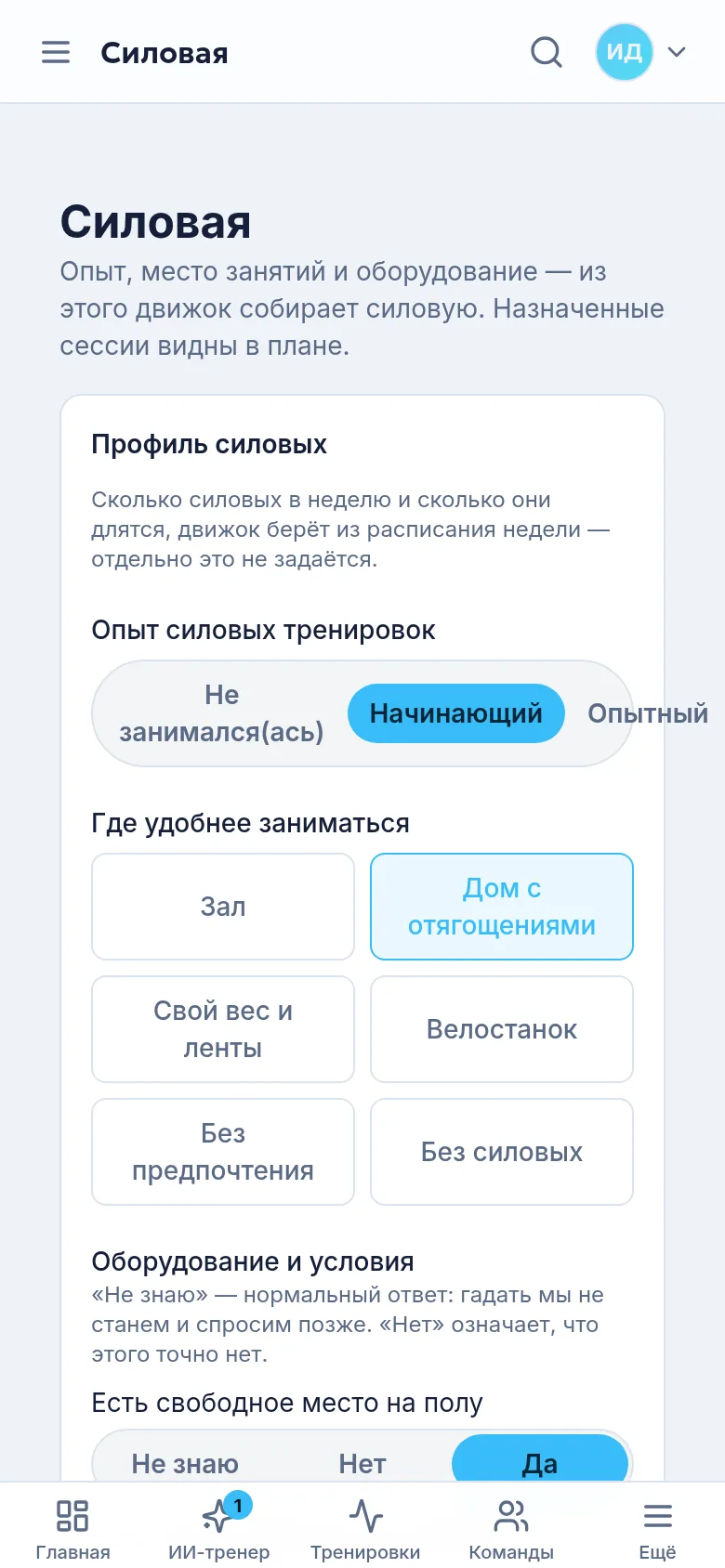
Before the first plan — a short profile: where you train (gym, home with free weights, bands and bodyweight), what equipment you have, your experience, how many sessions you are willing to do — zero, one or two — and how long. An empty field is a question, not “no strength for you”; an exercise without confirmed equipment never makes it into a session.

TriCoo strength profile on a phone: strength experience, where you prefer to train — gym, home with weights, bodyweight and bands, bike trainer

Technique shown and a muscle map

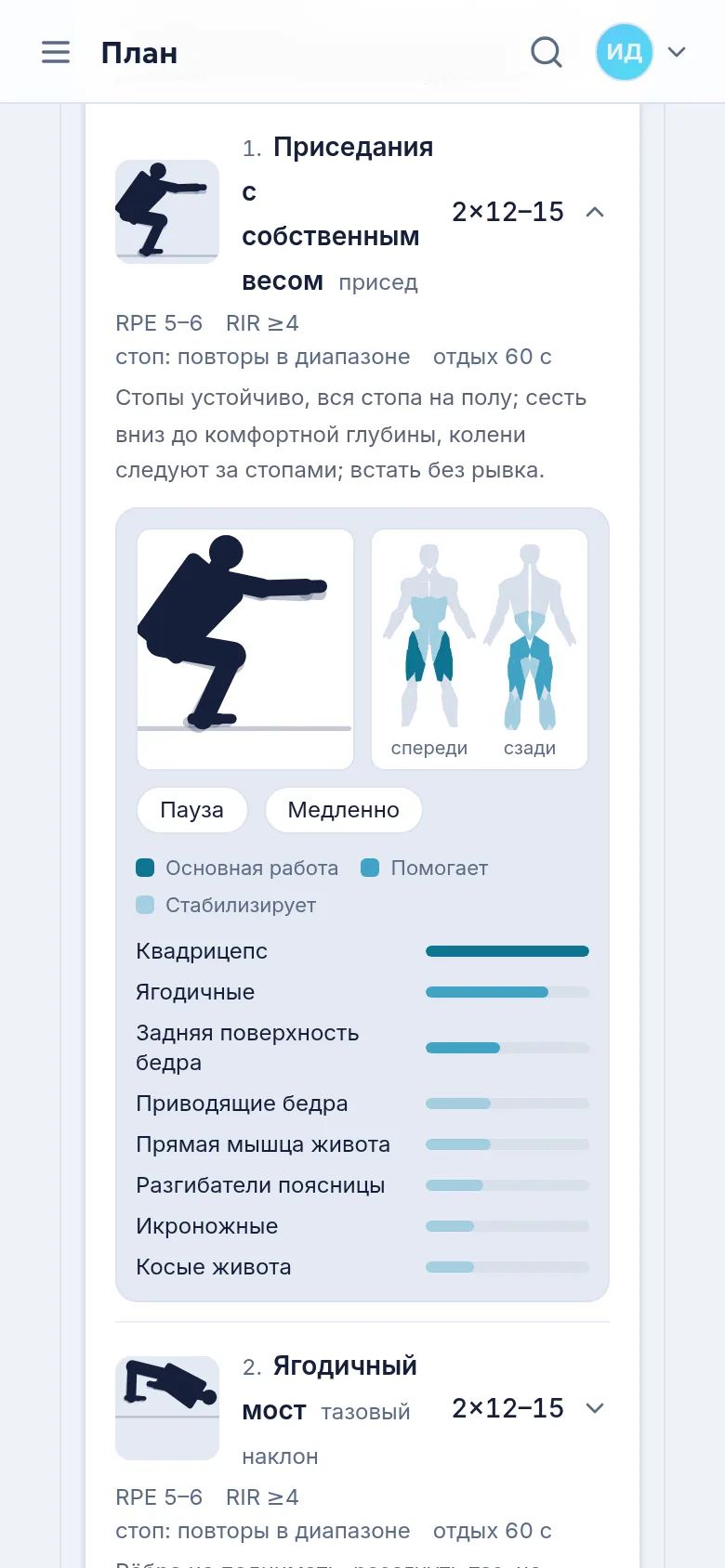
The session card shows an animation of every movement and a map of which muscles the exercise and the whole session load. The platform assigns no weights: you pick the resistance by the reps you keep in reserve, and progression is double — reps within the range first, then the next available step.

TriCoo strength session card: exercises with technique shown and a map of loaded musclesTechnique · muscles

How a session is built

With no strength experience — an introductory block: five simple bodyweight movements, at least four clean sessions of 25–30 minutes. Then development: main movements 3 sets of 6–10, assistance 2 sets of 6–15, effort 7–8 out of 10 with 2–3 reps in reserve. We never work to failure.

Its place in the year and the week

In general preparation — up to 2 sessions a week, in race preparation — one for maintenance, in the taper strength goes first. Within the week it never sits the day before a key run or ride; between heavy loads on the same system — at least 48 hours. The score goes into the muscular-impact counter, not aerobic fitness.

What is left out on purpose

Barbells — squats and presses need spotting we can’t verify from your description; jumps and plyometrics — an app without a coach can’t judge landing and surface; max tests and work to failure — not needed when dosing by feel. Dumbbells, kettlebells and machines give the same strength gain.

Strength training — an article in the help centre
04 — Together

Don’t train alone — without a feed for the feed’s sake

Follows, a feed and teams exist, but they are restrained: strictly chronological, no algorithms, leaderboards or counter pressure. The app is complete with zero follows.

  • Follows and the feed

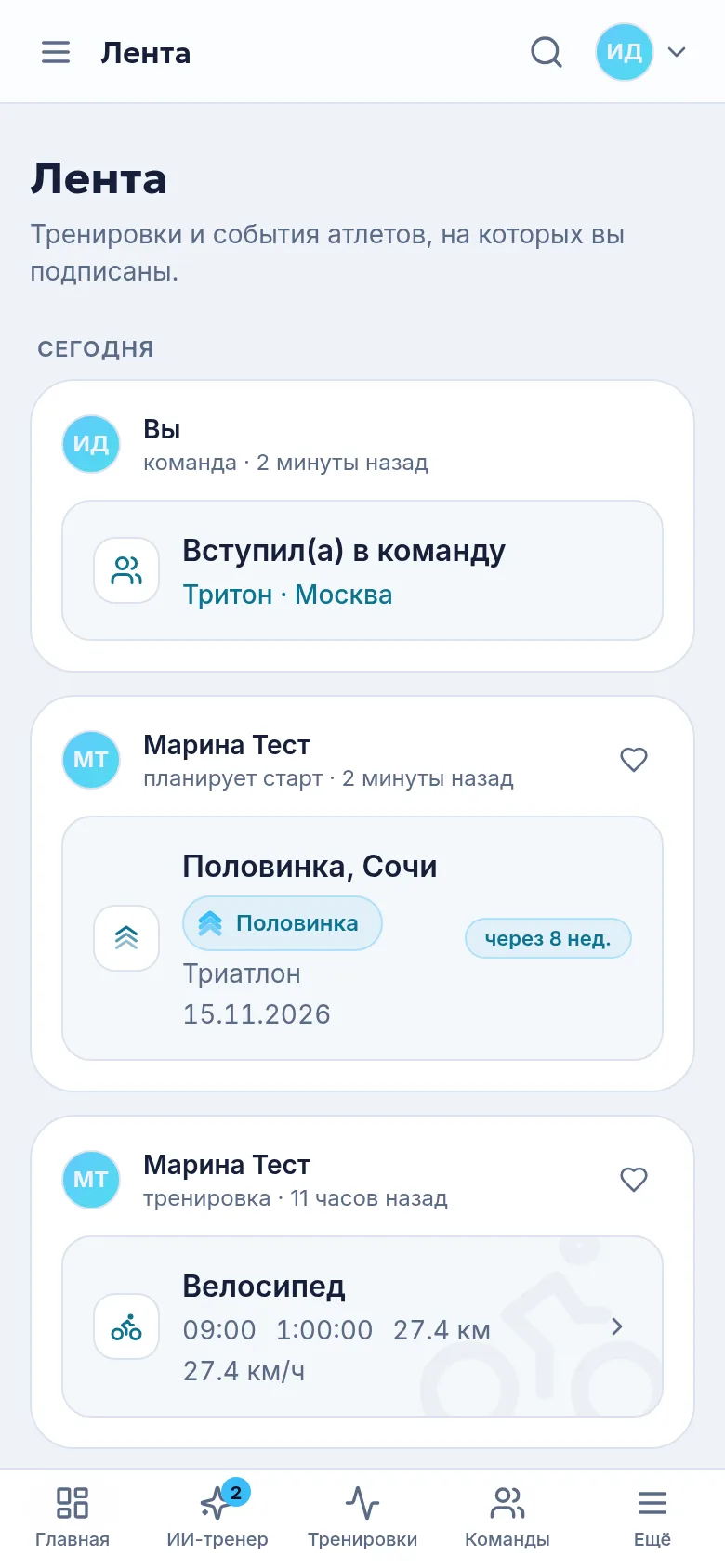
    Follow athletes — their sessions, chosen races, results and team joins appear in your feed in time order. A session can be acknowledged with one tap.

  • Teams

    A team catalogue, joining by request or invite link. A team has its roster, who is preparing for which race, and a feed of members’ sessions.

  • You choose the visibility

    Sessions are visible to followers only by default; “show to everyone” is a deliberate choice, and followers can be approved by hand. Going private doesn’t break follows, but closes the feed.

TriCoo feed: sessions and races of the athletes you follow and of your teammatesFeed · follows · teams
05 — The load score

Every session is one number. Pool, bike, run and strength add up.

An hour of work exactly at your threshold is about 100 points; everything is counted from that point. Intensity enters non-linearly: twenty minutes of hard intervals cost more than an hour of easy running. The scale matches the familiar TSS — the numbers will look familiar.

The most precise signal available

  1. 01Power

    A direct measure of work — on the bike.

  2. 02Pace

    Running and swimming — corrected for terrain and surges.

  3. 03Heart rate

    Steady aerobic work; on intervals or with a poor signal — one step down.

  4. 04Effort

    Your own 0–10 rating: a swim without a watch and a strength session in the basement get an honest score too.

What is cleaned before the calculation

  • GPS interference — impossible speed spikes are dropped, and the card shows how many.
  • Terrain and surges — normalised power and pace, not averages.
  • Heart-rate drift — not corrected: confidence is lowered and the observation is kept for durability.

The score is computed right after a session is loaded; form is computed from the scores every day. The aerobic and the muscular-impact circuits are counted separately: heart and legs recover at different speeds. And every score has a breakdown — the formula, the values plugged in, the threshold and its confidence.

How the score is computed — an article in the help centre
Breakdown on the session card · example
How the load was computed
Load
82
By running paceThreshold estimated
Load = 100 · h · IF²
IF = speed / threshold = 2.59 / 3.50 = 0.74
100 · 1.5 · 0.74² ≈ 82
Normalised speedPace corrected for terrain
6:26 /km
Critical velocity (CV)Your running threshold
4:46 /km
Duration
1:30:00
Intensity relative to threshold0.7 — easy · 1.0 — at threshold
0.74

Sunday of the demo week: 1:30, 14 km. Every session in the app has the same breakdown.

06 — Methodology

Every number in the plan has an origin

The engine’s methodology is not a secret and not “science-based” in vague words: the rules are written down, each with an evidence level, a source, an owner and a date.

Open the methodology

The help centre: how load and form are computed, how the plan is built and changed, where the medical boundary lies — in plain language, with sources for every rule.

14 articles · a glossary of 106 terms · 123 sources

How it is assembled

01

Hard-coded

Robust findings that are not tunable: the taper before the race, fever and alarming cardiac signs as an unconditional stop, the rule “no data ≠ rest”.

02

Tunable limit, labelled

The growth ceiling, the share of easy work, the deload rhythm, the readiness signal vote. Conservative, versioned values — coaching defaults, not laws of nature, and we say so.

03

Experimental

Personal fitting of the calculation’s memory, a composite finish forecast, DFA alpha 1. Lives on the side and does not affect the plan until confirmed.

Rules that run through everything

  • We lean towards undertraining. There is no coach next to you to stop you on a Wednesday — in doubt the engine picks the easier option and backs off earlier.
  • We propose, we don’t silently rewrite. An edit comes with “was → will be” and buttons; only hard safety rules apply on their own.
  • Planning is not medicine. Fitness, fatigue and form are planning tools, not health indicators; alarming signs are a separate circuit with a route to a doctor.
  • Every decision keeps its reason. Which rule fired and on which numbers — otherwise you can’t argue with the plan.

Training defaults and the safety circuit are approved by the platform’s methodology circuit and accepted by the founder — who prepares for his own races on this plan; contested forks go to a second independent opinion. There is no external medical reviewer — we don’t write that and don’t imply it.

07 — Terms

Everything usually written in fine print — in large.

What we promise and what we don't do. The same things are in the Terms and the Policy; here — in plain words.

What we promise

  • Free — for as long as we can. If anything changes, we'll say in advance in the Telegram channel.
  • Personal and medical data stays in Russia under 152-FZ.
  • The coach in the chat does not see your answers about health, well-being and readiness. The model receives an anonymised training context — no name, e-mail or diagnoses.
  • The engine's rules are open in the help centre, and every safety rule is covered by tests.
  • We train on it ourselves. The founder prepares for his own races on a TriCoo plan; everything new goes to the beta first, where he trains on it, and only then to you.
  • You can leave at any time. Delete the account in settings; we delete or anonymise the data within 30 days.
  • This is a beta: the service is alive and changing. We write about notable changes in the Telegram channel.

What we don't do

  • We don't catch up on missed sessions. A dropped session does not move to another day; the rest of the week is rebuilt.
  • We don't change the plan without your button. The coach proposes — you apply.
  • We don't promise a finish time. Only a split guide — as a range, with the assumptions listed.
  • We don’t require sensors or tests on entry. Without them the plan runs on perceived effort and calibrates. Connecting Strava or intervals.icu is not a condition of entry — but without the facts of your sessions the week is not rebuilt.
  • We don't replace a human coach. Technique in the water and in the gym is theirs. We cover the week's structure and load control.
  • We don't show ads or track you. Functional cookies only: language and sign-in.

What you write or say to the coach yourself is an ordinary chat message: words about health in it steer the conversation to the check-in, not to the model. Full texts — the Privacy Policy and the Terms of Use.

08 — Who is behind TriCoo

The promises on this page have a name.

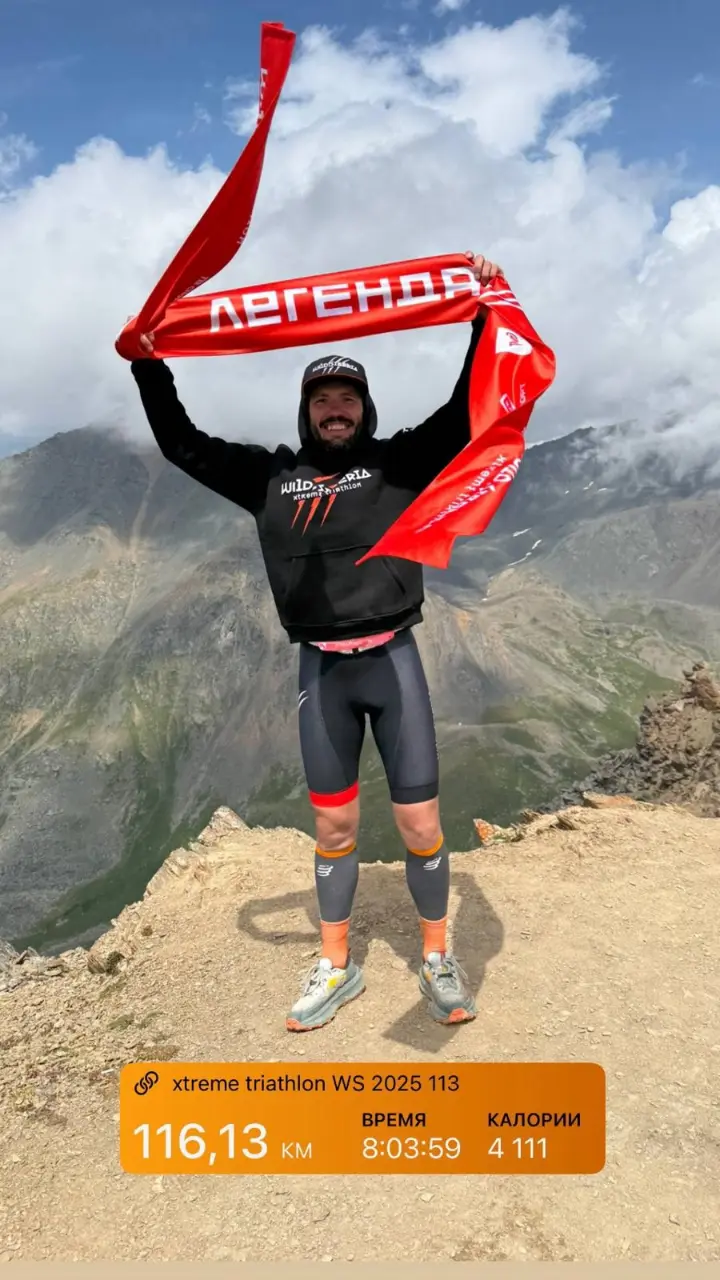
Artem Plastinin
At the finish of an extreme triathlon
Artem Plastinin
Founder of TriCoo · amateur triathlete

I came to triathlon late, with no athletic background, a full-time job and never enough time. And I wanted something bold: to break 5:30 over the half-distance.

Ready-made plans from the internet lasted exactly until the first cold or crunch at work. They knew nothing about my sleep or my week, and they either broke me or demanded a regimen an amateur simply doesn't have.

A good coach doesn't work that way: he keeps you inside a safe load corridor and adapts to your life. But a coach can't stand beside every athlete at six in the morning. So we built TriCoo: we wired a training methodology drawn from sports science and coaching practice, plus load control, into the engine. So that an amateur like me reaches the finish line in one piece.

Artem PlastininFounder of TriCoo · amateur triathlete
09 — Questions

What people ask before they press

Will it suit me if I'm just starting and don't know CTL or TSB?

Yes. All the numbers stay under the hood; you get clear prompts: what to do today and whether you can push. For a beginner the engine grows load more slowly and schedules recovery weeks more often. From a first sprint to Ironman.

How is this different from a real coach or a ready-made plan from the internet?

A ready-made plan knows nothing about your sleep, missed sessions or how you feel; TriCoo recalculates load around you. A human coach sees your technique in the water and in the gym, and TriCoo does not replace that. It covers something else: the structure of the week, load control and the recalculation when the week falls apart.

Do I need to connect Strava or intervals.icu? What if I use Garmin?

Not for the first week: the plan is built from the questionnaire. After that the plan needs facts: connect Strava or intervals.icu and sessions will arrive on their own — the week is rebuilt from them, thresholds are found and form is computed. Garmin, COROS, Wahoo and other watches come through them. Without a connection you can upload a file from your watch or log sessions by hand — it works, just by hand each time.

Do I need a heart-rate monitor or power meter?

Not required. Without sensors the first weeks run on perceived effort and calibrate that way. TriCoo finds thresholds in your ordinary workouts, and when a refinement is needed it suggests a short control test itself. You can decline.

What happens to my personal and medical data? Does the AI see it?

Stored in Russia under 152-FZ. The coach in chat has no access to your health answers, wellbeing or readiness: those explanations are assembled by the engine from templates, without a model. The model only receives anonymised training context, with no name, email or diagnoses.

What if I get sick or disappear for two weeks?

The plan will not demand cramming. After a break TriCoo builds a return week from what you actually lost and limits the growth of the next one. If you mark an illness, part of the load is removed until you feel well again.

Do you promise a finish time?

No. We show a guide per leg from your current thresholds: as a range and with the assumptions listed. Promising a race-day result from training data is not possible, and we do not do it.

Which distances are supported?

All triathlon distances: from sprint and Olympic to half and full Ironman, across all three disciplines at once.

How much does it cost?

The platform will stay free for as long as that is possible. If anything changes, we will say so in advance on our Telegram channel.

I missed a key session — will it move to another day?

It's not catching up: the engine looks for a slot for one key session within the next three days — if a day is free, the weekly cap is not exceeded and 48 hours remain between hard sessions — and offers the move with one button. The week does not grow from it. If the conditions aren't met, the session stays missed; easy missed sessions are never moved.

What happens if I edit a session above the cap myself?

The engine keeps your edit and names the excess in numbers: by how many LU or minutes the week went over the cap. There is no ban, but the warning stays on the card, and on a noticeable shift the coach offers to rebuild the rest of the week under the cap — with one button.

10 — The first week

Start with one week

Leave a request — we'll send an invitation. Then say how many hours you have and what you're preparing for — the week appears in your calendar. Every morning the home screen answers in one phrase what to do today. Installs on your phone like an app.

The service is for users aged 18 and over.

What you'll need

  • E-mail and password — or sign in with Strava or intervals.icu.
  • A short questionnaire: consent, about you, health and free days — four required steps. Race, thresholds and strength are optional and can be added later.
  • Nothing to buy. A heart-rate monitor and a power meter are optional. If you have Strava or intervals.icu, connect it: sessions will reach the plan on their own.

From the invitation to the first week of the plan — a few minutes. Free.